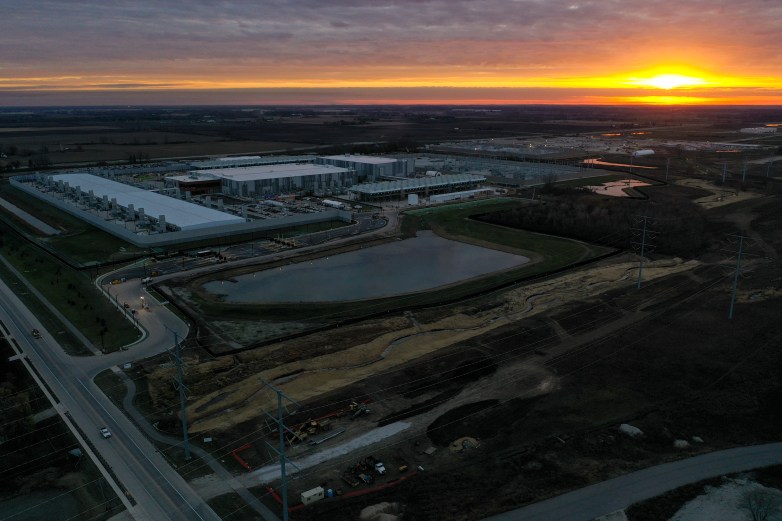
Microsoft and Wisconsin ratepayer advocates are asking federal regulators to hit the brakes on a proposal to allocate the costs of transmission infrastructure built to serve data centers.
Both argue that We Energies and the American Transmission Company’s (ATC) recent proposal to federal regulators fails to adequately protect Wisconsinites from picking up the construction bill, among other concerns.
The utilities’ plan — setting a minimum transmission charge for Microsoft based on its Mount Pleasant data center’s anticipated electricity needs — mirrors elements of a strategy approved by Wisconsin’s Public Service Commission (PSC) earlier this year.
We Energies and ATC argue the minimum charge will help prevent their other customers from paying for overbuilt infrastructure if the facility uses less electricity than anticipated.
Microsoft and ratepayer advocates, however, argue that the proposal falls short on protecting Wisconsinites from cost shifts and that the two closely related utilities left little room for input from those most affected.
Who pays for data center transmission upgrades?
ATC anticipates spending more than $500 million to upgrade the Mount Pleasant facility’s connection to the electrical grid. The utility passes infrastructure costs to customers of all kinds through their electrical bills; We Energies, for instance, estimates that transmission-related costs account for about 10% of customers’ bills.
The PSC can’t require ATC to bill data center developers for the full cost of infrastructure built to serve them. Only the five-member Federal Energy Regulatory Commission (FERC), which oversees interstate transmission, could overhaul billing rules to fully shield other customers from the costs of new lines and substations for data centers.
The PSC signed off on a work-around this spring, requiring We Energies to set a minimum transmission charge for its large data center customers based on their projected electricity use — the same projections used to plan transmission upgrades.


ATC and We Energies asked FERC earlier this month to approve a one-off transmission billing plan for Microsoft’s Mount Pleasant data center. The arrangement would require We Energies to pay ATC for the data center’s projected transmission capacity and pass that cost to Microsoft. The 15-year arrangement would take effect once ATC completes the infrastructure needed to serve the facility.
“This is a customer protection mechanism that follows the ‘cost causer, cost payer’ methodology,” an ATC spokesperson wrote in an email to Wisconsin Watch.
Microsoft says proposal leaves gaps
The utilities didn’t consult with Microsoft before filing their plan with federal regulators.
“The entire purpose of these agreements, by ATC’s own description,” is to serve the Mount Pleasant data center, Microsoft’s attorneys wrote in a protest to FERC on Friday. Moving ahead without Microsoft’s input, they added, would risk “the timely interconnection and operation of this infrastructure.”
In their view, the utilities’ current proposal contains “systemic” flaws.
Some, they argue, pose risks to Microsoft’s finances, including an early termination fee that could force the company to pay “excessively more” than the remaining value of the transmission infrastructure if it backs out of the agreement before the 15-year mark.
Both Microsoft and the Citizens Utility Board (CUB) argue other elements of the proposal pose risks to ATC’s other ratepayers, including those outside of We Energies’ territory.
In a separate protest filed Friday, CUB regulatory affairs director Corey Singletary noted that the proposal would base minimum transmission charges on ATC’s standard interconnection rates.
“The electric demands and associated supporting infrastructure investments are so large relative to traditional loads and investments” that ATC will almost certainly undershoot the actual cost of data centers’ transmission needs, Singletary wrote.
“While ATC’s proposal would likely be an improvement over the status quo,” he added, it still falls short of shielding the utility’s other customers from data-center-driven transmission costs.
Microsoft’s attorneys echoed those concerns, emphasizing that Microsoft signed the White House’s Ratepayer Protection Pledge this spring: a commitment to “pay for all new power delivery infrastructure upgrades required to service (its) data centers” and “ensure that these expenses are not passed on to the ordinary household.”
Microsoft urges more scrutiny
We Energies’ parent company, WEC Energy Group, is ATC’s largest shareholder.
“A negotiated bilateral contract between them — especially one involving such large sums — should be further scrutinized,” Microsoft’s attorneys wrote.
Microsoft also pointed out that the proposal wouldn’t require the utilities to seek their company’s input before amending some terms of the contract, nor would it “create a clear path for Microsoft (or anyone else) to inquire and scrutinize the scope or prudence of expenditures made on its behalf.”
Microsoft’s attorneys called that opacity “a recipe for future misunderstanding and litigation.”
Microsoft is asking FERC to send the entire proposal to a settlement judge, creating a venue for all parties to work through their concerns. As an alternative, the company’s attorneys suggested that the commission reject the utilities’ proposal outright. CUB, meanwhile, urged the commission to create a uniform transmission cost allocation process for all large data centers in ATC’s territory — including those in Port Washington and Beaver Dam.
ATC has yet to file a response to the complaints.
“ATC is reviewing Microsoft’s filing and will respond through the established FERC process to demonstrate that existing customers are fully protected by the agreements,” a spokesperson wrote in an email on Tuesday. “We remain committed to cost transparency and protection of existing customers while ensuring reliable transmission service.”

Wisconsin Watch is a nonprofit, nonpartisan newsroom. Subscribe to our newsletters for original stories and our Friday news roundup.