An attorney read from a laptop propped atop a snowplow.
To his left was a Caterpillar street grader, and to his right, a dusty workbench. A disheveled American flag hung next to a red toolbox in the center of the impromptu stage.
Dozens of southwest Wisconsin residents recently forsook part of the local high school’s track-and-field meet so they could cast their votes inside the town of Cassville’s garage. The attorney had been retained by the town’s elected leaders to read the soon-to-be-newest regulation.
The unanimous outcome — 44 ballots in favor of banning data centers, none against — reflected a hostile backlash to unwelcome big tech incursions into rural spaces.
Residents instructed their town board to put a stop to the billion-dollar proposal by an anonymous developer after learning their community was on the short list.
Even promises of 50 jobs and more than $5.5 million in annual property tax revenue weren’t enough to make up for the loss of about 500 acres of Wisconsin’s Driftless area.
The pastoral landscape — known for rolling bluffs that straddle the locks and dams of the nation’s upper Mississippi River — possesses a bountiful aquifer, a temperate climate and few land regulations.
The latest move against data centers
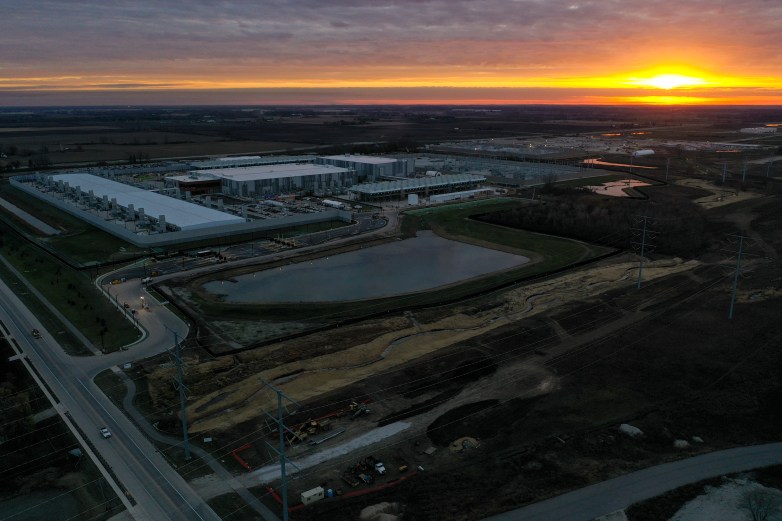
Cassville’s ordinance is the latest move by a Midwestern community seeking to protect the qualities that make life so appealing to people — and data centers.
Pushback over the power-hungry facilities that make the cloud run are occurring across the country, as companies expand in states like Mississippi and Tennessee.
Residents in Port Washington, Wisconsin, were the first in the nation to pass a referendum that would prevent their city from offering generous tax incentives without first obtaining voter approval.
Wisconsin lawmakers — some of whom previously supported a state sales tax exemption for new data centers — sponsored bills that would prevent developers from using confidential nondisclosure agreements when prospecting for new sites.
And in Clayton County, Iowa, directly across the river from Cassville, officials are considering zoning, setback and size restrictions.


Cassville residents fear data centers will devalue their properties, contaminate their wells and increase their electric bills.
“This is the Driftless area for Christ’s sakes,” said John Hawn, who retired to the area several years ago. “I suppose they didn’t expect any problems coming into a small town.”
‘There’s no information’
The Cassville project has been shrouded in secrecy. That includes the proposed location and what company will use it, leaving residents to fill in the vacuum with a frenzy of social media engagement.
“I don’t know really what to think about it because there’s no information,” town Supervisor Scott Riedl said.
Ron Brisbois, executive director of the Grant County Economic Development Corp., has met with a developer but to date declined to identify the company that is scouting for locations so as not to jeopardize the project.
In an interview after Cassville’s vote, he said the town’s appeal is its proximity to electricity, specifically the high-voltage Cardinal-Hickory Creek transmission line that entered service in September 2024.
Brisbois estimated the data center would require 400 to 500 megawatts of power — a lot, even by the new transmission line’s standards.
But the town’s attorney, Eric Hagen, said if Cassville can make it inconvenient, the data center developer may look elsewhere. The company also is considering sites in Indiana and North Dakota.
“My read of the situation right now: They’re looking for the lowest-hanging fruit with the least amount of regulations,” Hagen said.
Cassville’s new ordinance prohibits data centers in the town for up to two years and prevents land use changes, such as constructing a residence on a farm field, without the town board’s approval. And the county cannot preempt local zoning authority in the town’s case, Hagen said.
“We can beat them to the punch.”
Data centers raise ire
Days after the town’s vote, Brisbois fielded questions from a concerned public at J&J’s Sandbar, a Cassville restaurant, over chicken and ham, mashed potatoes with gravy and macaroni salad.
He wonders whether the objections reflect data centers’ tarnished image more than concerns over actual water and power use. If a battery or farm equipment manufacturer were to move in and consume more of each, would residents even notice?
Brisbois said the developer has remained quiet for the past month, which he attributes to the lack of local tax incentives for the project rather than community unease.
“I’m looking forward to a bit quieter days,” he said, “where all I have to worry about with townships is housing and maybe an ag or a farm expansion.”

Wisconsin Watch is a nonprofit, nonpartisan newsroom. Subscribe to our newsletters for original stories and our Friday news roundup.