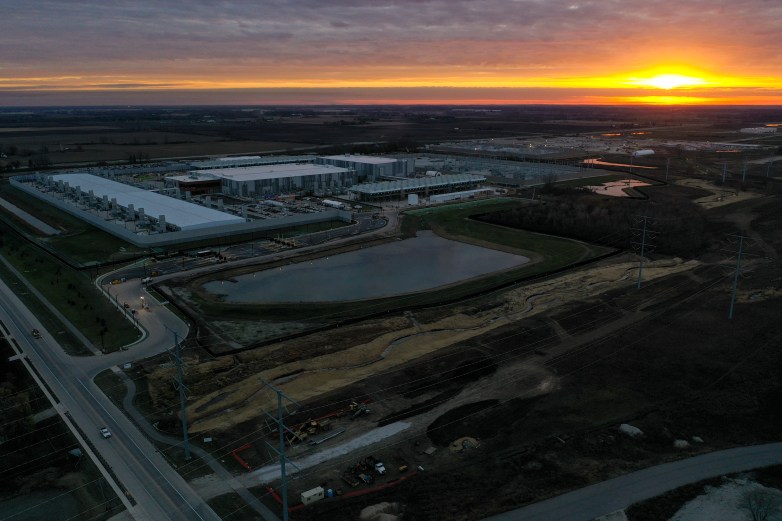
Data centers have made headlines and influenced the political debate across Wisconsin this year.
That’s why earlier this year we launched Data(Centers)Watch as a regular feature in Forward, our free Wisconsin government and politics newsletter that comes out on Mondays. Every week since mid-February, reporter Tom Kertscher has provided tidbits of data center news, including the latest from city council and county board meetings where land use decisions are being made amid public outcry, national industry news and recent polling about the issue.
To get these data center updates each Monday, please subscribe. Here’s a look at the updates that appeared in Forward since March.
July 20, 2026
ICYMI 1: Data centers making millionaires: Our story about how, through land purchases, a data center made millionaires of farmers and homeowners in Port Washington, prompted a follow-up story by Inc. magazine. “A data center isn’t buying acreage, it’s buying co-location with things that can’t be moved: transmission and substation capacity, water for cooling, and fiber,” an economist told Inc.
ICYMI 2: Balloonist LLC paid $25.5 million to buy more than 300 acres of land last fall for a stalled data center proposal in Menomonie. State records show the largest sum, nearly $12 million, was paid to a Menomonie couple for 150 acres of farmland. The proposal is on hold while the city considers zoning regulations. In communities such as Caledonia in Racine County and DeForest in Dane County, tentative land purchase agreements were made. But they were dependent on the data centers winning approval.
Powering data centers: Wisconsin’s peak electricity demand will increase 40% by 2032 and data centers in Port Washington, Mount Pleasant and Beaver Dam will account for nearly three-quarters of that growth, says a draft report from the state Public Service Commission, which regulates utilities.
Moratoriums update: New York, through an executive order by Democratic Gov. Kathy Hochul, became the first state to adopt a moratorium to block data centers. In Wisconsin, Democrat Francesca Hong is the only candidate for governor to call for a statewide moratorium. At least 24 Wisconsin communities have adopted moratoriums, typically lasting one year. The most recent include Green County and the village of Hobart near Green Bay.
A (limited) NDA ban: The Columbia County Board of Supervisors last week approved a policy that prohibits the 28 elected supervisors from signing nondisclosure agreements covering data center proposals. Supervisor Denise Brusveen of Poynette, who proposed the policy, told Wisconsin Watch: “I wanted to be very clear to the public that they should be able to trust us.” She said she’s interested in exploring an ordinance that would prohibit others, such as county staff, from signing NDAs. Wisconsin Watch investigated data center NDA use in January.
Midwest in focus: California freelance reporter Jasmine Sun, who’s been published in The New York Times and The Atlantic, traveled through Wisconsin last week for a funded project she’s doing on data centers in Wisconsin and Michigan.
July 6, 2026
22 moratoriums: By our count, at least 22 Wisconsin communities have adopted moratoriums, typically lasting one year, to block data centers.
Counties: Clark, Dane, Dodge, Door, Grant, La Crosse, Manitowoc, Rusk and Shawano.
Cities: Madison and Superior.
Villages: Ashwaubenon and Wrightstown, near Green Bay; Baldwin in St. Croix County; Greenville in Outagamie County.
Towns: Beetown, Bloomington and Cassville in Grant County; Westport in Dane County; Hampden in Columbia County; New Denmark in Brown County; Big Bend in Rusk County.
Numerous other communities are considering moratoriums, including, most recently, the City of Oshkosh, St. Croix County and Green County, the town of Pella in Shawano County and the town of Holland in Brown County.
Power tax: Virginia expects its newly adopted, nation’s first electricity consumption tax on data centers will generate $600 million annually.
Tax breaks and NDAs: Pennsylvania is considering legislation to prohibit data centers from signing nondisclosure agreements if they want to qualify for tax breaks.
New specialist: Karl Green, a community planning specialist at the University of Wisconsin-Madison Extension, has a new role advising communities about data centers. “I am not a cheerleader for data centers, nor am I trying to dissuade communities from considering them,” he says. “I believe the local units of government make their best choices based on factual evidence, not hearsay or emotionally charged arguments. I hope to be able to provide that factual evidence.”
Berens blast: Comedian Charlie Berens targets Wisconsin data centers and water quality in a new video.
June 29, 2026
Wisconsin-izing AI: Two University of Wisconsin-Madison Information School professors say the data used to train artificial intelligence systems doesn’t equitably represent Wisconsin. So they’re proposing “a statewide public AI infrastructure shaped by the people who live and work here, with data gathered locally and transparently.” UW is also launching the new College of Computing and Artificial Intelligence on Wednesday. It’s the first academic division created at UW–Madison in more than 40 years.
Studying ‘opinion leaders’: Elizabeth (Libby) Foster, a doctoral student in science communication at the University of Wisconsin-Madison, has begun a study on the narratives and mobilization techniques of data center public opinion leaders in Wisconsin — people supporting and opposing data centers.
Organizing property owners to sell: In Pennsylvania, a company is organizing dozens of property owners to sell their land to data center developers, the Data Center Richness blog reports. That approach differs from individual property transactions, like what was done for the data center under construction in Port Washington.
Michigan looking to regulate: Bills introduced by Democratic Michigan state lawmakers that target data centers would limit nondisclosure agreements and water use, and require 90% “clean energy” and community benefits agreements.
Microsoft’s read on benefits: Microsoft, which is building a $20 billion data center complex in Mount Pleasant, has spent $1.1 billion in Outagamie County alone, according to a report commissioned by Microsoft and prepared by the Mandala consulting firm. Microsoft last week announced the opening of its first Mount Pleasant data center.
ICYMI, Port data center suit: In a lawsuit over the $15 billion data center under construction in Port Washington, Oracle wants to avoid state credit rating requirements it says will cost millions. No hearings are scheduled.
June 22, 2026
Unpopularity contest: Alliant Energy’s Becky Valcq urged acknowledging that utilities, government and large load customers such as data centers “aren’t at the top stratosphere of public trust,” RTO Insider reported. She said Alliant encourages large load customers to communicate with residents, have plans for traffic and water impacts, and be open to making contributions to nonprofits.
‘Radically pragmatic’: “America doesn’t need a simple yes-or-no debate over data centers. It needs a better civic compact to honestly weigh their benefits and costs,” says the Progressive Policy Institute, which describes itself as “radically pragmatic.” With a compact, “data centers get access to land, power, public infrastructure and sometimes tax incentives. Communities get ratepayer protection, environmental safeguards, honest job claims, workforce pathways, transparency and enforceable commitments.”
Moratorium momentum continues: Add these to communities that have adopted data center moratoriums: Grant County, the City of Superior and the Village of Wrightstown, southwest of Green Bay. And add these to communities that are considering data center moratoriums: Monroe, Dodge and Winnebago counties, City of Eau Claire, the Village of Hobart near Green Bay and a number of townships in Vernon County.
‘Data-Center Panic Is Overblown’: So says a headline in The Atlantic. Most complaints about data centers “inflate the costs of data centers and overlook the fact that, in some contexts at least, they can bring real benefits,” the article says.
Noise lawsuits: Residents in three small towns, in Michigan, New Jersey and Massachusetts, filed lawsuits in May over what they allege is constant humming and vibrations from data centers, The New York Times reported.
June 15, 2026
Evers counters opposition: Wisconsin Gov. Tony Evers, a Democrat, says pushback against data centers “has been a positive thing because it’s changing some of the conversations from the people that are” developing the sites. But data centers are “a significant way to increase our ability to compete with the rest of country.”
Texas governor cracks down: Texas Gov. Greg Abbott, a Republican, is proposing legislation to regulate data centers: repeal their sales tax exemption; require them to pay for the cost of generating the electricity they need and add electricity to the grid; require annual reporting on electricity and water use. Arizona is proposing a three-year halt to its sales tax exemption. It’s estimated Wisconsin will forgo $2 billion in revenue from its data center sales tax exemption.
More moratoriums: The Village of Greenville in Outagamie County and the towns of Bloomington and Waterloo in Grant County are now among Wisconsin communities with a data center moratorium. The City of Superior, and La Crosse, St. Croix and Winnebago counties have joined the list of communities considering a moratorium.
Overcoming opposition: “Community opposition is no longer an isolated challenge; it has become the Achilles’ heel of the data center industry,” says Tricia Braun, leader of the Wisconsin Data Center Coalition, who attended a seminar on data center opposition. Tips she took away: “Listen early and often. Manage impacts credibly and transparently. Demonstrate tangible community value. Co-design solutions with stakeholders. Formalize commitments.”
On data centers and electricity prices: The Brattle Group consulting firm says in a report that Madison-based Alliant Energy is “well-positioned to mitigate the risk of a cost shift from large loads,” such as data centers, to other customers. The report was commissioned by Alliant.
Business impact: We joined a panel conversation on Wisconsin Public Radio about the impact of data centers on Wisconsin businesses.
June 8, 2026
Boosts for Wisconsin businesses: Racine-based Modine announced a $4 billion deal with an unidentified customer for its data center cooling products and Waukesha-based Generac announced a “global” agreement to supply backup power generators to an unidentified data center operator. We reported in March that Modine and Generac were among three Wisconsin companies that had done more than $1 billion in data center business. Meanwhile, suburban Milwaukee-based Rehlko says it plans later this year to open a facility in Kenosha to assemble parts for backup generators for hyperscale data centers.
Moratoriums, continued: Add Grant, Rock and Dodge counties, and the Village of Cottage Grove in Dane County and the Village of Ashwaubenon in Brown County to communities considering data center moratoriums. Grant is significant because a $1 billion data center has been proposed there, and the county’s Cassville and Bee townships have adopted moratoriums. Brown County, meanwhile, has tabled a moratorium proposal. As we reported in last week’s Forward, moratoriums are also being considered in Oneida, Shawano and Vernon counties, in the City of Sheboygan and in the Village of Greenville in Outagamie County and in Bloomington township in Grant County. One is being requested in the Town of Beloit. Moratoriums have been adopted in Dane, Door and Manitowoc counties and by the City of Madison.
Opposition, widening: The local- and county-level rallies and information meetings on data centers are trying to go larger. Data center opponent Blaine Halverson says the goal of Eau Claire-area events June 13-14 is to unite residents from 12 western counties.
Good for rural, power exec says: The CEO of Dairyland Power Cooperative, which provides electricity to western Wisconsin, says data centers “are a path to prosperity” in small communities, “and if we don’t allow growth there, then we’re going to continue to foster the poverty we see in rural America.”
Restricting NDAs: The town board in Beloit has banned town employees from signing nondisclosure agreements like the one its former administrator signed with a data center developer more than a year before the town announced a data center had been proposed. Wisconsin Watch revealed in January that officials in at least four Wisconsin communities had signed data center NDAs, hiding details of data center proposals from the public.
Biodiversity in Port: Construction of the $15 billion data center under construction in Port Washington includes planning for native grasslands, wetland enhancement, pollinator-focused landscaping, ecological stormwater features and habitat restoration intended to support migratory birds and the endangered rusty patched bumblebee, Data Center Knowledge reports.
June 1, 2026
More-atoriums and more: Moratoriums to block hyperscale data centers have been adopted by at least four Wisconsin local governments and are being considered in at least six more.
The Door County Board last week adopted a one-year data center moratorium. Moratoriums have already been adopted in Madison, Manitowoc County and Cassville township in Grant County, where developers have proposed a $1 billion-plus data center.
Also in Grant County, the Beetown town board last month adopted an interim zoning ordinance that specifically blocks large data centers and the Bloomington town board is considering one.
Moratoriums are being debated in Brown, Dane, Oneida, Shawano and Vernon counties and in the Village of Greenville in Outagamie County.
The village board in Wrightstown, southwest of Green Bay, took a different approach. It decided last week to put an advisory referendum on the Aug. 11 ballot asking residents if the village should support infrastructure for potential data centers.
Wisconsin in the AI middle: Wisconsin ranks 29th among the states in artificial intelligence adoption, according to a Microsoft estimate, with 28% of working-age residents using generative AI products such as ChatGPT or Microsoft Pilot.
Midwest down on data centers: 55% of adults in the Midwest, compared with 47% nationally, say construction of new data centers have a very or somewhat negative effect on the country.
Cost of sales tax exemptions: Ohio’s state sales tax exemption for data centers was worth $1.6 billion in 2025, three times more than 2024, Signal Ohio reported. The office of Republican Gov. Mike DeWine, who vetoed legislation to repeal the exemption, said data centers invested $27.2 billion in 2025. But DeWine is also pausing any new sales tax exemptions for data centers. We reported that Wisconsin is projected to forgo more than $2 billion from its exemption and that lawmakers are interested in tying requirements to the exemption.
May 18, 2026
An ‘emergency’ in Milwaukee: Word of a “data center” coming to a former Walmart on Milwaukee’s northwest side caused fears, with one neighborhood group posting an “emergency notice.” The data processing facility would be located with housing and a library and be a fraction of the size of the hyperscale data centers getting all the attention. Nevertheless, the proposal was removed from the agenda for Monday’s city Plan Commission meeting, presumably to be considered at a later time.
Conditional sales tax exemption: Legislation in Colorado sponsored by Democrats and pushed by a former Republican governor would have created a state sales tax exemption for data centers that included requirements such as energy efficiency standards and prevailing wages. The legislature dropped the bill this month. In North Carolina, lawmakers are considering rolling back the state sales tax exemption for the electricity purchased by data centers. Wisconsin Watch reported that Wisconsin is projected to forgo more than $2 billion from its exemption and that lawmakers are interested in tying requirements to the exemption.
Activists get elected: Leading data center opponents who were elected to public office last month include Prescott Balch, Caledonia Village Board in Racine County; Michael Beaster, Port Washington City Council; and Cassandra Pope, Janesville City Council.
Fighting opposition: Data center developers should be more open as a way to neutralize opposition, says Arent Fox Schiff, a business-focused law firm based in Washington, D.C. One tip: “Proactive, transparent engagement with local stakeholders, including hosting informational sessions and developing community benefits plans, can help build support and reduce permitting risk.” A report says the swing states of Wisconsin, Michigan and Georgia account for 22% of all data center opposition groups in the U.S.
More-atoriums: The Vernon County Board in southwest Wisconsin is looking into whether it can impose a data center moratorium. The City of Madison, Manitowoc County and Cassville township in Grant County have moratoriums.
May 11, 2026
Wrightstown, Janesville data centers? Talk of a possible data center led the village board in Wrightstown, southwest of Green Bay, to have a general discussion about data centers last week. A developer is eyeing the Town of Janesville for a data center, the Janesville Gazette reported.
Sheboygan moratorium discussed: Sheboygan city officials are considering a temporary data center moratorium. The City of Madison, Manitowoc County and Cassville township in Grant County have moratoriums.
Power alert: Data centers are one reason the North American Electric Reliability Corp., a nonprofit watchdog of power systems, issued a warning last week about the reliability of the grid due to “immediate risks posed by computational loads.”
Power perspective: S&B Global says data center expansion is not the main driver of increased electricity prices in the U.S. But “the effects of data center demand on electricity prices may yet materialize as new rate cases progress and regional grid capacities become increasingly strained.”
May 4, 2026
Open to openness: The energy publication Factor This urges more openness on the part of data centers and utilities, saying: “Reversing this trend is about more than PR, though, as it’s connected to larger, proactive efforts to communicate the value of these projects to communities long before they begin. … What matters is true community connection. It requires shifting from an opaque development process that breeds suspicion into a transparent framework that actively invites community feedback. Success across the energy and tech sectors will be driven by those who prioritize this connection and transform technical projects into shared missions by outlining the collective and societal value their efforts will enable.”
Moratoriums approved, proposed: The Manitowoc County Board approved an 18-month moratorium on data centers. Earlier this month in the Driftless Area, the town of Cassville in Grant County approved a two-year moratorium. The town board in Hampden in Columbia County will hold a public meeting May 26 to discuss adopting a moratorium.
Data center donation: Vantage, Oracle and OpenAI, the companies behind the $15 billion data center under construction in Port Washington north of Milwaukee, announced they will donate $225,000 to the school district’s education foundation.
April 27, 2026
Blocking a Driftless Area data center: The town board in Cassville, where a developer has eyed a possible data center, has adopted an “interim” zoning ordinance that includes a data center moratorium. The interim ordinance would stay in place for two years, unless a permanent zoning ordinance is adopted before then. In January, the Madison Common Council unanimously adopted a one-year data center moratorium.
Power and the people: The state Public Service Commission’s preliminary decision Friday to protect utility ratepayers from bearing part of the cost of generating power for data centers will help prevent “stranded assets,” commissioner Marcus Hawkins said. Wisconsin Watch reported in December that ratepayers owe more than $1 billion on the debt of stranded assets — power plants that have already been shut down. The rush to provide power to new hyperscale data centers runs the risk of creating more stranded assets.
Partnering with ag? One way data centers might counter opposition is by working with local farmers to develop irrigation systems that reduce agricultural water use and make data centers more efficient, according to national data center development expert Christian Belady, the Data Center Richness website reported.
No NDAs: All of the major candidates in the Wisconsin governor’s race said or indicated to the Milwaukee Journal Sentinel they oppose data center nondisclosure agreements.
Data center in Wisconsin Rapids? A data center complex spanning more than 200 acres is being proposed in Wisconsin Rapids. A public hearing before the city planning commission is set for May 4. A data center proposed for the city in 2025 was dropped.
April 20, 2026
In Menomonie, an apology: Two days after losing his re-election campaign on April 7, Menomonie Mayor Randy Knaack apologized to residents during a special city council meeting on a proposed $1.6 billion data center. Menomonie is one of several Wisconsin communities that signed data center nondisclosure agreements. The city signed its NDA more than a year before announcing the proposal in July 2025. Knaack put the proposal on hold two months later. “I apologize to the community that this probably didn’t go right to start with, but I think we can fix those problems and we can move this forward” on considering zoning and other restrictions, he said. He added: “If it wasn’t for the tenacity of the public … saying we don’t want a data center, this data center would already be going.”
Creeping into the campaign: Data centers are gradually gaining primacy among the candidates running for governor. Beyond policy statements made on the campaign trail, data centers got a mention in the first TV ad from Republican Tom Tiffany. He pledged to stop “big data from bulldozing our farmland.” On the campaign trail, all seven Democratic candidates have called for more data center regulation.
Where Wisconsin fits nationally: Because of power availability, Wisconsin, Indiana, Michigan and Missouri are the Midwest states that will “grow rapidly in importance” in hyperscale data center construction over the next few years, a market research firm says.
Heading to the country: In the U.S., 67% of planned data centers are in rural areas — a shift from 87% of existing data centers being in urban areas, Pew Research Center reports. A rural area in the Grant County part of the Driftless Area is being considered for a $1 billion-plus data center.
Football field wide, Empire State long: Two buildings included in the $15 billion data center under construction in Port Washington are each the length of the Empire State Building and the width of a football field, the Ozaukee Press reported.
April 13, 2026
From ballot box to court: The reportedly first data center referendum in the U.S. could make large-scale developments more difficult in Port Washington. Approved last Tuesday by voters in the Ozaukee County city, it was pushed by opponents of the $15 billion data center under construction there. The city now must get referendum approval to create any tax incremental finance district — a business development tool — worth over $10 million. The city created a $175 million TIF district for the data center. Attention now turns to the courts. A hearing is set for Thursday on a business-backed lawsuit seeking to block the referendum from taking effect.
Second poll: Costs outweigh benefits: Some 70% of registered Wisconsin voters believe the costs of data centers outweigh the benefits, according to a Wisconsin Conservation Voters poll taken in February and released last week. The same result was found in a February Marquette Law School poll.
Add-on data center approved: With a $1 billion data center under construction, Beaver Dam has approved a second, much smaller, $40 million data center.
Data center opponent elected: Menomonie City Council member Matthew Crowe, an opponent of a data center proposed for Menomonie, unseated incumbent Mayor Randy Knaack in Tuesday’s election. Crowe cited lack of transparency over the data center proposal as a key to his win. Menomonie is among several Wisconsin communities that signed nondisclosure agreements to hide details of the proposals.
ICYMI: We’ve been discussing our coverage of data center secrecy deals. Recent spots: WUWM radio’s “Lake Effect” show (segment starts at 11:15), Civic Media’s “Nite Lite” show (starts at 23:30) and the Ventures of the Land podcast. We reported that Wisconsin companies are part of a coalition asking a federal agency to pause competitive bidding for electrical transmission projects needed to serve data centers.

April 6, 2026
Cure for blight? The $8 billion data center proposed for Janesville is unique in that it would involve a $30 million cleanup of the contaminated General Motors plant, which shut down in 2008. The cleanup cost has led 200 potential developments of different types to walk away, the energy and environment-focused E&E News reports. Also noteworthy is this quote from the city manager about power: “One of the most glaring needs that has not yet been addressed is statewide legislation to clarify that data centers pay for 100% of their costs.”
Referendum on Tuesday’s ballot: A referendum that could make large-scale developments more difficult is on Tuesday’s election ballots in Port Washington. It was pushed by opponents of the $15 billion data center under construction there. If the referendum is approved, the city would have to get referendum approval to create any tax incremental finance district — a business development tool — worth over $10 million. The city created a $175 million TIF district for the data center.
Limiting public comment: The city council in Beaver Dam, where one hyperscale data center is under construction and a smaller one is proposed, limited the public comment at its meeting last week to 20 minutes. That irked some data center opponents because the period is usually open-ended, though each individual is asked to speak for two minutes. Mayor Bobbi Marck told Wisconsin Watch several items were likely to involve lengthy discussion and the comment limit was meant to use the council’s time effectively. All 10 speakers criticized data centers and the council, including Jackson Brook, 18, who said the council made data center decisions too quickly and without enough public input.
Legislative intent/inaction on NDAs: Commenting on the Legislature ending its 2025-26 session without approving any data center bills, Milwaukee data center attorney Rod Carter cited legislation that would have prohibited local governments from signing nondisclosure agreements with data center developers. “The legislative intent was clear: the era of secret data center deals in Wisconsin should be over,” he wrote. “Whether that intent becomes law remains an open question.”
March 30
Town chair calls cops on petitioner: In Grant County, which is one location being considered for a $1 billion data center, Waterloo town chair Chad Brinkman called the sheriff’s office March 21 asking that resident Richard Stelpflug be removed from public property. Stelpflug was collecting signatures on a petition seeking to have the town authorize “village powers” — which the neighboring town of Cassville did March 12 to try to get more control over any data center proposal. A sheriff’s deputy informed Brinkman that Stelpflug had a First Amendment right to circulate a petition on public property — which happened to be the Waterloo Township Shop and Hall. As it turns out, the town already adopted village powers in 1965. An update on where Grant County stands among sites being considered is expected soon.
Rock County also signed NDA: A Rock County Board committee voted down a resolution prohibiting county employees from signing nondisclosure agreements. Pointing to data center NDAs, the resolution cited concerns “across Wisconsin that the signing of an NDA without the input of the public and elected officials is unethical and risks the public trust.” Wisconsin Watch reported that the town of Beloit in Rock County signed an NDA in February 2025, more than a year before announcing this month that a data center has been proposed. Last week, Rock County responded to a Wisconsin Watch public records request showing it signed an NDA with the same company, Delaware-based Cambrin LLC, in January 2025. Janesville, about 10 miles northeast of the town of Beloit, has also signed a data center NDA, with Colorado-based Viridian Acquisitions.
Alliant Energy’s record stock price: Madison-based Alliant Energy’s record-high closing stock price reached $73.03 on March 16. The main reason, according to The Motley Fool: an influx of data centers in the Midwest, including one under construction in Beaver Dam.
AI fear fuels opposition? Some opposition to data centers might stem from uneasiness about artificial intelligence. The Marquette Law School Poll found 69% of Wisconsin registered voters surveyed said AI is being developed too quickly. The same percentage said the costs of data centers outweigh the benefits.
ICYMI: Wisconsin Watch looked at competition over who builds out the grid as data centers demand more power.


March 23
No data center legislation: The Legislature considered a number of data center bills but concluded its work in the 2025-26 session without passing any of them. That means data center legislation won’t come up again until the Legislature’s next regular session begins in January. One of the bills, to ban nondisclosure agreements between data center developers and local governments, was introduced by Rep. Clint Moses, R-Menomonie. He told Wisconsin Watch his bill was crowded out by other priorities, but that he’s hopeful it will eventually pass. Also disappointed was GOP Assembly Speaker Robin Vos. He said at an event that requiring data centers to pay for their own electricity, as some legislation would require, is “probably an 80% issue for the public.”
Opposition in Grant County: Cassville township residents voted 54-3 this month to authorize “village powers.” The move gives the township more control over matters such as zoning. It was sought by residents who want more control over any data center proposal. A developer has included Cassville, in the Driftless Area in southwest Wisconsin, as one possible site for a planned $1 billion data center.
ICYMI: Microsoft announced it would stop doing NDAs with local governments amid growing focus on local governments and data center secrecy. We explored data centers’ job implications, particularly for developers, construction and operations. We also fact-checked a claim that Mount Pleasant’s massive data center will use relatively little water. Go here to see our data centers coverage in one place.
March 16
‘Bulletproof’ vest in Port: Port Washington police have been called about a dozen times to Lighthouse, the Vantage-OpenAI-Oracle data center campus, since the construction groundbreaking Dec. 17. Police reports show the largest number involve complaints of either trespassing or excessive construction noise. But on Dec. 26, a security officer on the site reported being told by a motorist she “hopes the vest they wear is really bulletproof.” Police called the motorist and left a voicemail message, according to the report. The motorist did not return calls and emails from Wisconsin Watch.
‘Stranded assets’ targeted: One of the Democratic candidates for governor, former Lt. Gov. Mandela Barnes, announced a plan to prohibit residential and other utility customers from having to cover the cost of “stranded assets” — power plants that have been shut down but on which debt is still owed. Wisconsin Watch reported in December that ratepayers owe $1 billion for stranded assets and that the rush to build more plants to serve data centers runs the risk of creating more stranded assets.
‘Stranded assets’ targeted II: In a model for state data center legislation, the University of Wisconsin-Milwaukee Center for Water Policy proposed making data center companies financially responsible for stranded assets. The companies would be required to post a bond.
Beaver Dam limits public comment: The city council in Beaver Dam, where one data center is under construction and another is proposed, is limiting to 20 minutes total the public comment at its meeting tonight. That raised concerns among data center opponents, some of whom packed a town hall meeting on data centers last week. Typically, the council’s public comment period is open-ended, though individuals are each asked to limit their remarks to two minutes. Mayor Bobbi Marck said several items are likely to involve lengthy discussion and the comment limit is meant to use the council’s time effectively. Ald. Nancy Wild said data center opponents have spoken at the previous eight council meetings. “I think we have been very reasonable,” she said.
March 9
Quietly, a possible Beloit data center: News of a possible data center in the town of Beloit comes eight months after the town quietly signed a predevelopment agreement. Last week, the town, saying it was responding to information “being disseminated” about a possible data center, announced it had begun “very preliminary discussions,” including signing the agreement. The town board in May approved negotiating a predevelopment agreement with Delaware-based Cambrin LLC, but the meeting minutes do not mention a data center. The predevelopment agreement, signed in July, also does not mention a data center. It says that the town will pursue a tax incremental district to finance infrastructure improvements that would be needed and that Cambrin agreed to reimburse the town up to $175,000 for preliminary work. “If the project actually moves forward, we would have a frank discussion with the developer about who should be paying for any improvements that are needed,” town administrator John Malizio told Wisconsin Watch. News reports indicate that Meta, the owner of Facebook and Instagram, could be the data center operator.
Data centers’ $1 billion for Wisconsin: Even before the first hyperscale data center begins operation in Wisconsin, data centers have made an economic impact in the state. No comprehensive tally has been done. But just three Wisconsin companies have received more than $1 billion of business supplying data centers, and other companies are benefiting, too, Wisconsin Watch found. That’s separate from the economic impact from constructing data centers.
Electric-onnections: The data centers under construction in Mount Pleasant and Port Washington came together because a We Energies executive met the co-founder of Cloverleaf Infrastructure, which secures power and land for data centers, The New York Times reported. “We’ve got the site for you,” the executive said at a Chicago conference in 2021, proposing Mount Pleasant and, later, Port Washington.
March 2
Who pays for the power: The state Public Service Commission held a hearing last week on who will pay for providing the electricity needed to run the $1 billion data center being constructed in Beaver Dam. The center is owned by Meta, the owner of Facebook and Instagram. Opponents said the rate structure proposed by Alliant Energy doesn’t protect general ratepayers from bearing some of the costs. The same concerns have been raised to the PSC about We Energies’ proposed rates for data centers in Mount Pleasant and Port Washington. Comments on the Alliant case can be submitted through March 9. That deadline was extended after Alliant agreed to remove some redactions it made in its application to the PSC.
Legislation delayed, in doubt: One bill on data centers might see action, but others are likely on ice now that the state Assembly has adjourned for the 2025-26 session. The Senate could still act on an Assembly-approved bill that seeks to limit how much general ratepayers can be charged by utilities for the cost of providing electricity to data centers. It’s likely that various bills that would prohibit local governments from signing nondisclosure agreements with data center developers won’t be considered again until a new Legislature convenes in January.
Blocking a possible data center: A move is afoot to block a possible data center in Grant County in southwest Wisconsin. Doug Schauff, the town chair in Cassville, said the town will hold a meeting March 12 on adopting “village powers.” That, in turn, would enable the town to create zoning that would regulate projects such as a data center. A data center developer has told the town it is considering the Cassville area, among other locations, for a possible $1 billion facility.
Port Washington referendum: An April 7 referendum in Port Washington pushed by data center opponents can proceed as scheduled, a judge ruled last week. Pro-business groups had sued to try to stop the vote. If the referendum is approved, the city would have to get referendum approval to create any future tax incremental finance district – a business development tool – worth over $10 million. The city created a $175 million TIF district for the $15 billion Open AI/Oracle data center now under construction in Port Washington.
From DeForest to Iowa: Virginia-based QTS Data Centers will build in Iowa a data center it had planned for the Madison suburb of DeForest, according to Alliant Energy, which will supply the electricity. Amid community opposition, the $12 billion facility proposed for DeForest was abruptly dropped in January after Wisconsin Watch reported that village officials had worked on the proposal for months before announcing it to the public.
Voters down on data centers: Regardless of how much they have heard about data centers, most registered Wisconsin voters polled by Marquette Law School said the costs outweigh the benefits. Opposition was 74% among those who have heard a lot about data centers, 73% among those who had heard nothing at all and 68% who had heard a little.
Expect delays? Some 30-50% of data centers projected to open worldwide in 2026 could be delayed, according to the Sightline Climate research firm: Access to electricity is a key reason, and more data center operators are building their own power rather than relying on the grid.

Wisconsin Watch is a nonprofit, nonpartisan newsroom. Subscribe to our newsletters for original stories and our Friday news roundup.